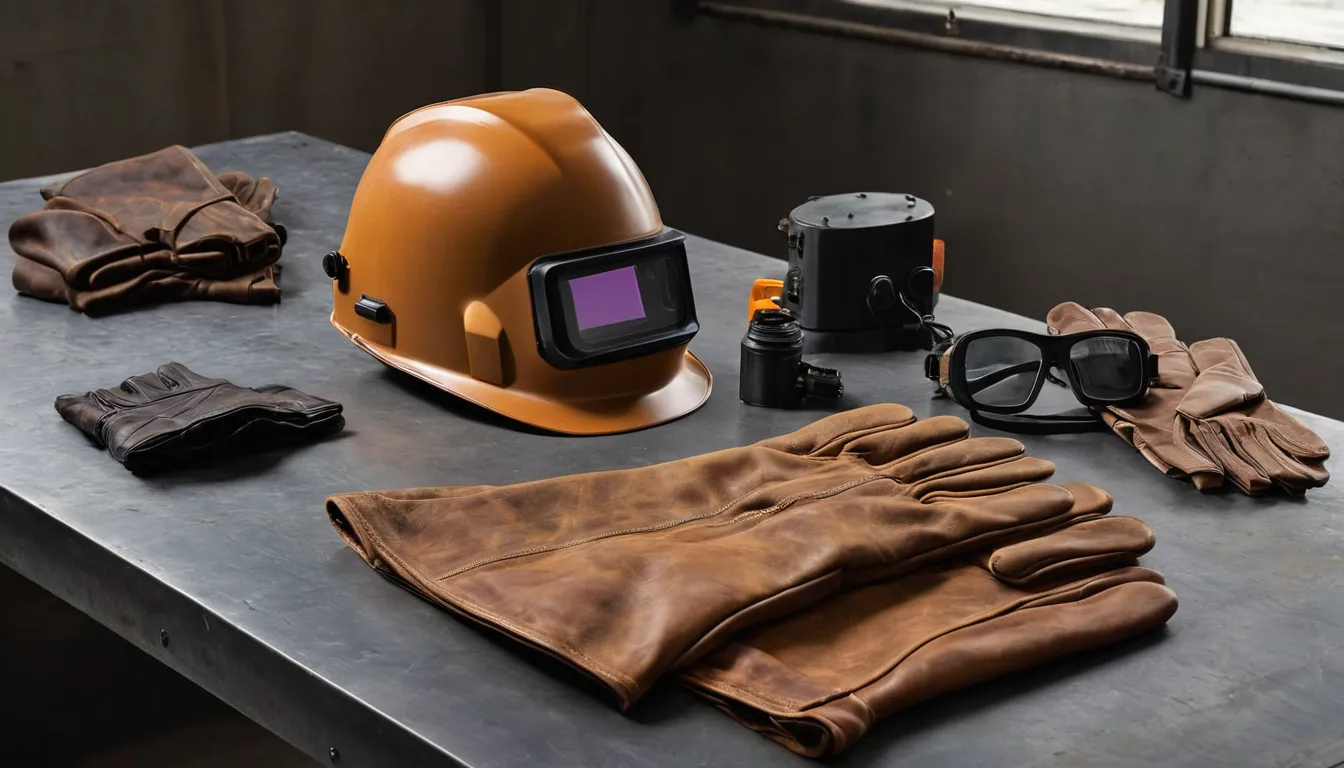
Helmet and lens shade
A welding helmet protects your eyes and face from the arc's ultraviolet and infrared light and from spatter. Looking at an arc without a filter, even briefly, can cause a painful flash burn to the surface of the eye, often called arc eye or welder's flash. Symptoms tend to show up hours later.
Lenses are rated by shade number. Higher numbers are darker. Arc welding generally needs a dark filter, commonly somewhere around shade 10 to 13, and the right number depends on the process and the amperage. OSHA publishes a filter lens shade table, and helmet makers print their own chart in the manual. Use those tables. When in doubt, start darker and go lighter until you can see the puddle clearly.
Auto-darkening helmets stay light until the arc strikes, then darken in a fraction of a second. They let you position the gun or rod with the helmet down. Check the batteries or solar cell, keep the cover lenses clean, and replace a cracked filter.
Safety glasses under the helmet
Wear impact-rated safety glasses at all times in the shop, including under the helmet. Slag from chipping and grinding sparks fly when the helmet is up. Look for the impact rating marking on the frame and lens.
Gloves, jacket and clothing
- Gloves. Thick leather gauntlet gloves for MIG, flux-core and stick. TIG gloves are thinner for feel, and they are still leather.
- Jacket or sleeves. A welding jacket of leather or flame-resistant cotton protects your arms and neck from spatter and ultraviolet burns, which feel like a bad sunburn.
- Clothing. Wear long sleeves and long pants in cotton, wool or flame-resistant fabric. Avoid synthetics such as polyester and nylon, which melt onto skin. Button the collar and cuffs, and wear pants without cuffs, which catch sparks.
- Boots. Leather work boots, ideally high enough that pant legs cover the tops. Hot spatter that lands in a low shoe is a classic first-week burn.
- Head and neck. A flame-resistant cap or hood stops sparks landing in your hair, especially when welding overhead.
Hearing protection
Grinding is loud, and some welding processes are too. Earplugs or earmuffs protect your hearing. Earplugs also stop a stray spark from dropping into an ear canal when you work overhead.
Breathing protection
Good ventilation is the first line of defense against fumes, and it is covered in ventilation and fire safety. When ventilation is not enough, a respirator rated for welding fumes fits under many helmets. At work, an employer's respiratory protection program covers fit testing and the right type. At home, read the respirator maker's instructions and check that it seals.
Before every session
- Helmet lens checked for cracks, and the shade set for this job
- Safety glasses on
- Gloves dry and free of holes
- Sleeves down, collar buttoned, no synthetic layers
- Pockets empty of lighters and matches
- Fire extinguisher within reach
This is a general overview. For workplace requirements, read OSHA's welding, cutting and brazing pages, and follow the manual for your helmet, respirator and machine.
Safety gear questions
Can I use sunglasses or a grinding face shield to weld?
No. Neither filters arc radiation enough. Only a welding helmet or face shield with a proper shade-rated filter is suitable for arc welding.
Do people nearby need protection?
Yes. The arc can burn the eyes of anyone who looks at it. Use welding screens or curtains to shield others, and warn people before you strike an arc.